City feature, three of three
The Basque table
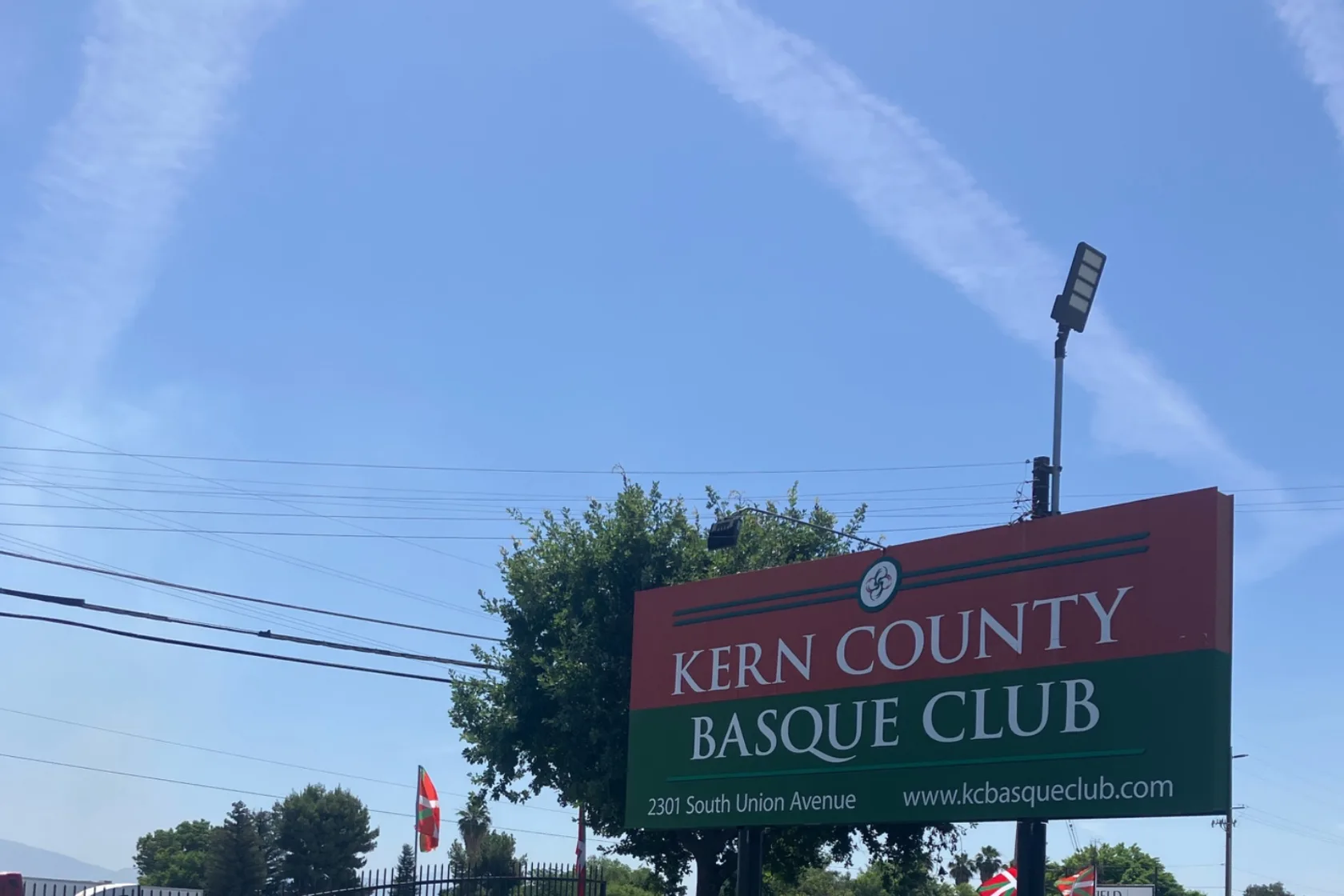 Photo by Etor; cropped, resized, stripped of metadata and converted to WebP from a CC BY-SA 4.0 work.
_-_Tagzania_-_1779647739991.jpg)
Ask someone outside California what Bakersfield is known for and you will usually get the music. Ask someone who has driven through and stopped for dinner, and you may well get the other answer: a long table, a stranger sitting opposite, and more courses than anyone ordered.
That arrangement is an inheritance. From the late nineteenth century, Basque emigrants from the western Pyrenees came to the American West in numbers, and a great many of them went into sheep. It was seasonal, solitary work carried out over long distances, and it created a specific need: somewhere to stay between contracts, in a town, among people who spoke the language. The answer was the boarding house.
These houses did far more than rent beds. They held mail, extended credit, arranged work, translated documents, hosted weddings and funerals, and fed everyone at one sitting because that was the cheapest and most sociable way to do it. Meals were served at fixed hours at communal tables, in courses, with whatever the kitchen had made that day. The Center for Basque Studies at the University of Nevada, Reno, which maintains a dedicated research programme on the subject, documents the wider Basque presence in the American West and the institutions that supported it.
Bakersfield and the surrounding county ended up with one of the most durable of these communities. Its social centre remains visible: the Kern County Basque Club still occupies its site on South Union Avenue. Several of the city's restaurants trace their descent directly from boarding-house kitchens, and the family-style service — soup, beans, salad, a main course, the whole thing brought out for the table rather than the individual — survives as a form rather than as a theme.
The documentary record of Basque life in California is also held nationally. The Library of Congress, through its American Folklife Center, holds California field material gathered in the late 1930s that documented the music of many communities in the state, Basques among them.
What this has to do with an insurance file
Boarding houses are a good reminder that who occupies a building matters as much as who owns it.
Most residential policies are written on the assumption that the owner lives in the property. Once someone else is living there — a long-term tenant, a lodger, a relative paying rent, a seasonal worker in a room over the garage — the assumption behind the policy has shifted, whether or not anything about the building has. Depending on the arrangement, the right answer may be a landlord or dwelling policy rather than a standard homeowners form, and the tenant's own possessions will not be covered by the owner's policy at all.
The same applies to hospitality on a private property. Cooking for thirty people in a domestic kitchen for a family event is one thing; doing it regularly for payment is another, and the second usually belongs outside a personal policy. Anyone whose house has quietly acquired a commercial habit should raise it before a claim rather than during one.
None of this is a judgement about any particular household. It is simply the point at which the paperwork needs to catch up with the practice, and the issued policy and its endorsements decide the outcome.
※Where this page comes from
- University of Nevada, Reno, Center for Basque Studies — Center for Basque Studies
- Library of Congress, American Folklife Center — California folklife research guide
- California Department of Insurance — Residential Insurance: Homeowners and Renters