City feature, two of three
Oil fields and farm rows
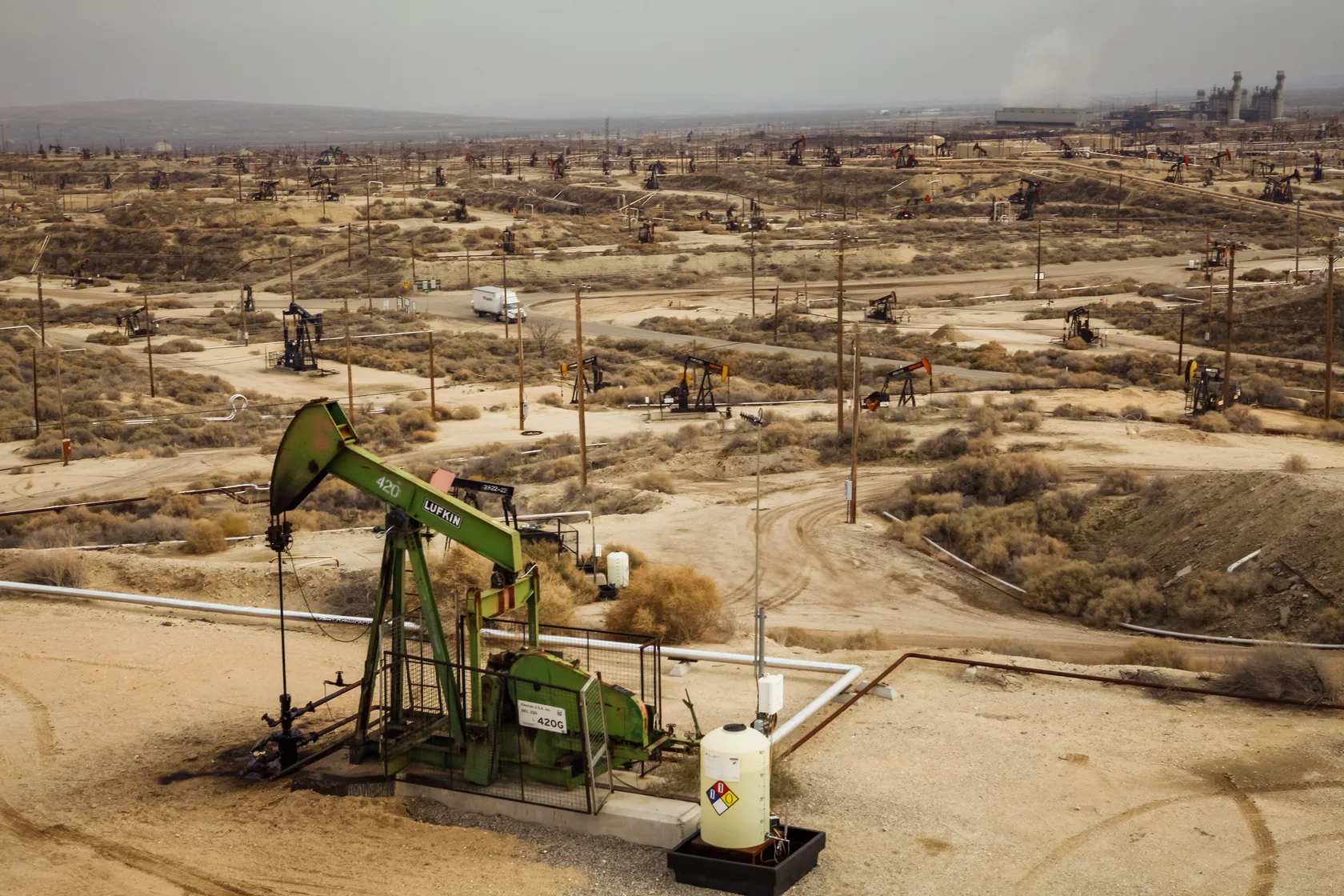 Photo by the Bureau of Land Management California; resized, stripped of metadata and converted to WebP from a public domain work.
.jpg)
Drive twenty minutes in almost any direction from downtown Bakersfield and the ground starts doing one of two jobs. Either it is pumping, or it is growing. Kern County has spent more than a century doing both at once, and the combination is unusual enough that it shapes the working week for a large share of the people who live here.
The oil came first in commercial quantity. Fields west and north of the city were among the most productive ever developed in the state, and the county has remained the centre of California petroleum production ever since. The Department of Conservation, through its Geologic Energy Management Division, publishes the official production figures — annual reports of the State Oil and Gas Supervisor going back to 1974, earlier summaries reaching to 1915, and monthly production and injection reports broken out by field and operator. Anyone who wants the current numbers rather than a general impression should read them there.
Agriculture arrived alongside it and outgrew almost everyone's expectations. Kern is consistently one of California's highest-value farm counties, and its crop mix is broad: citrus, grapes, tree nuts, and a large carrot acreage that puts the county among the most significant carrot producers in the country. County agricultural commissioners compile the underlying figures each year, and the United States Department of Agriculture's National Agricultural Statistics Service publishes them as the County Agricultural Commissioners' Data reports, county by county.
The visible result is a landscape of mixed use. Well heads sit at the edges of orchards. Packing sheds, equipment yards, shop buildings and driver accommodation are spread across the county rather than concentrated. A great many households here have at least one member whose work involves a vehicle, a shift pattern, and a commute that does not look like a city commute.
What this has to do with an insurance file
Two ordinary questions follow from that, and neither is exotic.
The first is about vehicles. A personal automobile policy covers personal use. Once a vehicle is used in the course of a business — carrying tools between sites, hauling equipment, making deliveries, or being driven by a worker rather than the named insured — the position can change, and it is the policy wording rather than the habit that decides. Anyone whose truck does a day's work as well as the school run should ask directly how their own policy treats it. The California Department of Insurance publishes consumer guidance on automobile coverage.
The second is about outbuildings. Detached structures — a shop, a barn, a covered equipment bay, a second garage — are usually insured under a separate limit from the house itself, and that limit is commonly set as a percentage of the dwelling figure rather than from any survey of what is actually standing on the parcel. On a property with several outbuildings, the default can fall well short. It is a quick thing to check on a declarations page and an expensive thing to discover afterwards.
Neither point means a Kern County address is treated differently for being a Kern County address. It means the ordinary policy questions land here in a particular shape. The issued policy and its endorsements determine what is covered in every case.
※Where this page comes from
- California Department of Conservation, Geologic Energy Management Division — Oil, Gas, and Geothermal Statistics and Production
- USDA National Agricultural Statistics Service, California — County Agricultural Commissioners' Data
- California Department of Insurance — Automobile insurance consumer guides