City feature, one of three
The Bakersfield Sound
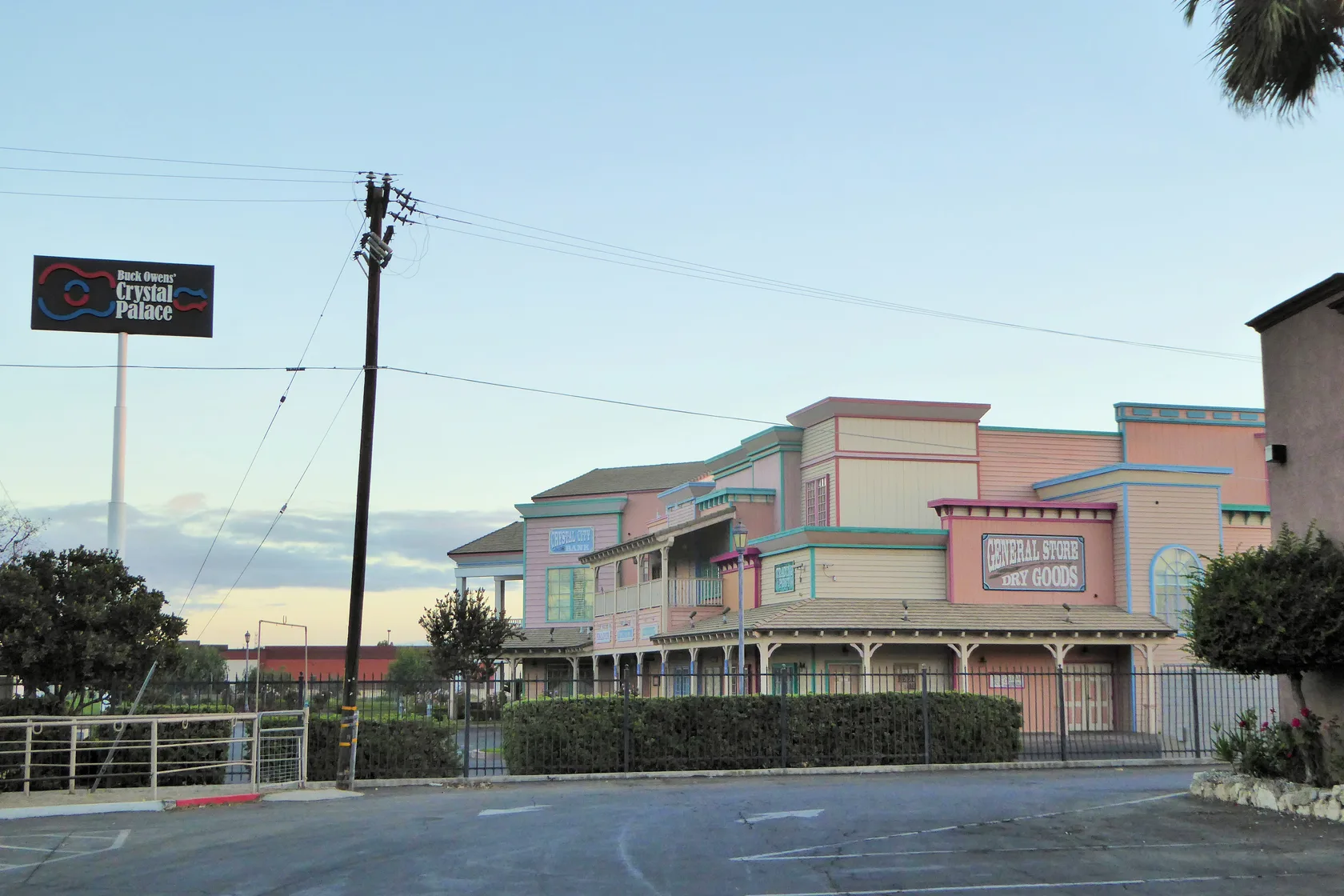 Photo by Pierre André; cropped, resized, stripped of metadata and converted to WebP from a CC BY-SA 4.0 work.

In the years after the Second World War, Bakersfield filled up with people who had come west for work and stayed. They brought the music of the places they had left, and the bars along Union Avenue and out toward Oildale gave it somewhere to be played loudly.
What came out of those rooms was not the smooth, string-backed country being recorded in Nashville at the same time. It was built for a crowded floor: electric guitars with the treble left in, a snapping backbeat, and singing that did not apologise for the accent it arrived with. The Fender Telecaster, an instrument designed about a hundred miles down the road in Fullerton, turned out to be exactly the right tool for cutting through a noisy room, and it became the signature of the style.
Two names carried the music furthest. Buck Owens built a run of records through the 1960s that were bright, fast and unmistakably his, and he later opened a venue in Bakersfield that kept the repertoire in front of audiences. Merle Haggard grew up in the town and wrote from inside it, turning working life, prison time and homesickness into songs that people well outside California recognised as true. Both men were eventually elected to the Country Music Hall of Fame.
The institutional record of all this sits in two places. The Country Music Hall of Fame and Museum in Nashville mounted a full exhibition on the subject, The Bakersfield Sound: Buck Owens, Merle Haggard, and California Country, which opened in March 2012 and ran until the end of 2014. Closer to home, the Kern County Museum keeps stage costumes, instruments, sheet music and memorabilia from Owens, Haggard, Red Simpson, Bonnie Owens and Fuzzy Owen, and it also holds the Haggard House — the singer's childhood home, built in 1935 out of a 1910 railway refrigerator car and furnished with heirlooms given by his family.
Standing in front of that converted boxcar is a useful corrective to the idea that the Bakersfield Sound was a marketing category. It was made by people who lived in small buildings on the edge of a working town, and it sounds like that.
What this has to do with an insurance file
Nothing about a music venue or a museum tells an insurer anything about a particular address, and no honest agent would suggest otherwise. But the buildings in this story do raise a question worth putting on a checklist: what happens to the things inside a house that are worth more than their weight?
Instruments, recordings, stage clothing, signed material and collections generally sit awkwardly inside a standard homeowners policy. Personal property is usually covered, but several categories carry internal limits far below the overall contents figure, and those limits apply whether or not the owner knows about them. The usual remedy is a scheduled endorsement listing named items with agreed values, which is a different arrangement from ordinary contents cover and is priced separately. The California Department of Insurance sets out how residential personal property cover is structured in its consumer guide to homeowners and renters insurance.
If there is a guitar in the house that would be genuinely hard to replace, the time to find out how the policy treats it is now, not after a fire. As always, the limits and endorsements shown on the issued policy control what is actually covered.
※Where this page comes from
- Country Music Hall of Fame and Museum, exhibition record — The Bakersfield Sound exhibition
- Kern County Museum, featured exhibits — Bakersfield Sound and the Haggard House
- California Department of Insurance — Residential Insurance: Homeowners and Renters